
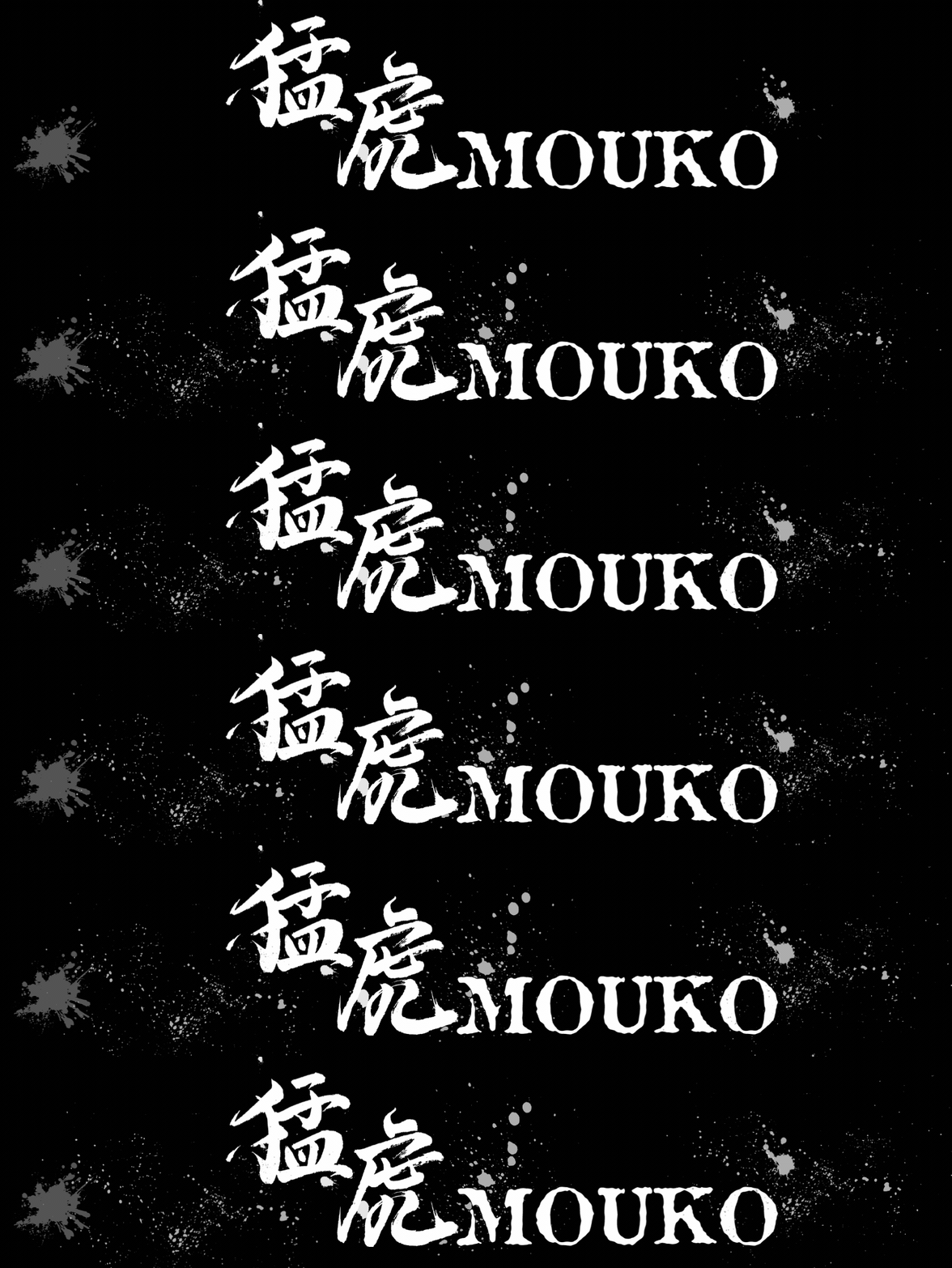
MOUKO — Where Calligraphy Meets the Fighter's Spirit
Hand-brushed kanji, paired with a 19th-century tiger painting from The Met's public domain collection.

The Spark
Watching a combat sports tournament, I was struck by the fighters' focus and heart — but again and again, I noticed something off on their team wear: brush-written kanji that simply didn't mean what people thought it meant. Martial arts and calligraphy share the same DNA — both built on focus, on a single committed line, on movement caught in total concentration. Fighters who show that much power on the mat deserve to wear something that carries real meaning. So I decided to make it myself.
Choosing "猛虎" (Mōko)
For fighters, I wanted a character that was visually powerful and unmistakably clear. Mōko — "ferocious tiger" — kept coming back to me: an animal of overwhelming force, a symbol of authority, a ward against misfortune. This is the first in a series — more characters are coming.
Pairing It With History
I paired the calligraphy with "Tiger by a Rushing Stream," painted by Ganku (1749–1838) — an Edo-period artist so devoted to studying tigers he became known as "Tiger Ganku." The work is public domain via The Met's Open Access collection. Two authentic things, brought together: art built on a lifetime of study, and calligraphy built on real intention. Both elements were then traced and vectorized for clean, fade-resistant print.

Where This Comes From
I've been close to shodō since childhood, fortunate enough to watch skilled calligraphers at work and study their pieces up close. No matter how long you practice, every stroke comes out differently — and there's real joy in that unpredictability, in never quite knowing what you'll get. With 20 years as a designer, I want to translate that feeling visually, even if only a fraction of it comes through. Every stroke here was made with intention — and no two lines are ever the same.
Why Print-on-Demand
I care about cotton, and I know the reality of training gear: sizes change, summer means going through several shirts, team pride means wearing it beyond the gym. Print-on-demand makes it possible to offer something people can replace often without it becoming expensive.
I care about cotton, and I know the reality of training gear: sizes change, summer means going through several shirts, team pride means wearing it beyond the gym. Print-on-demand makes it possible to offer something people can replace often without it becoming expensive.
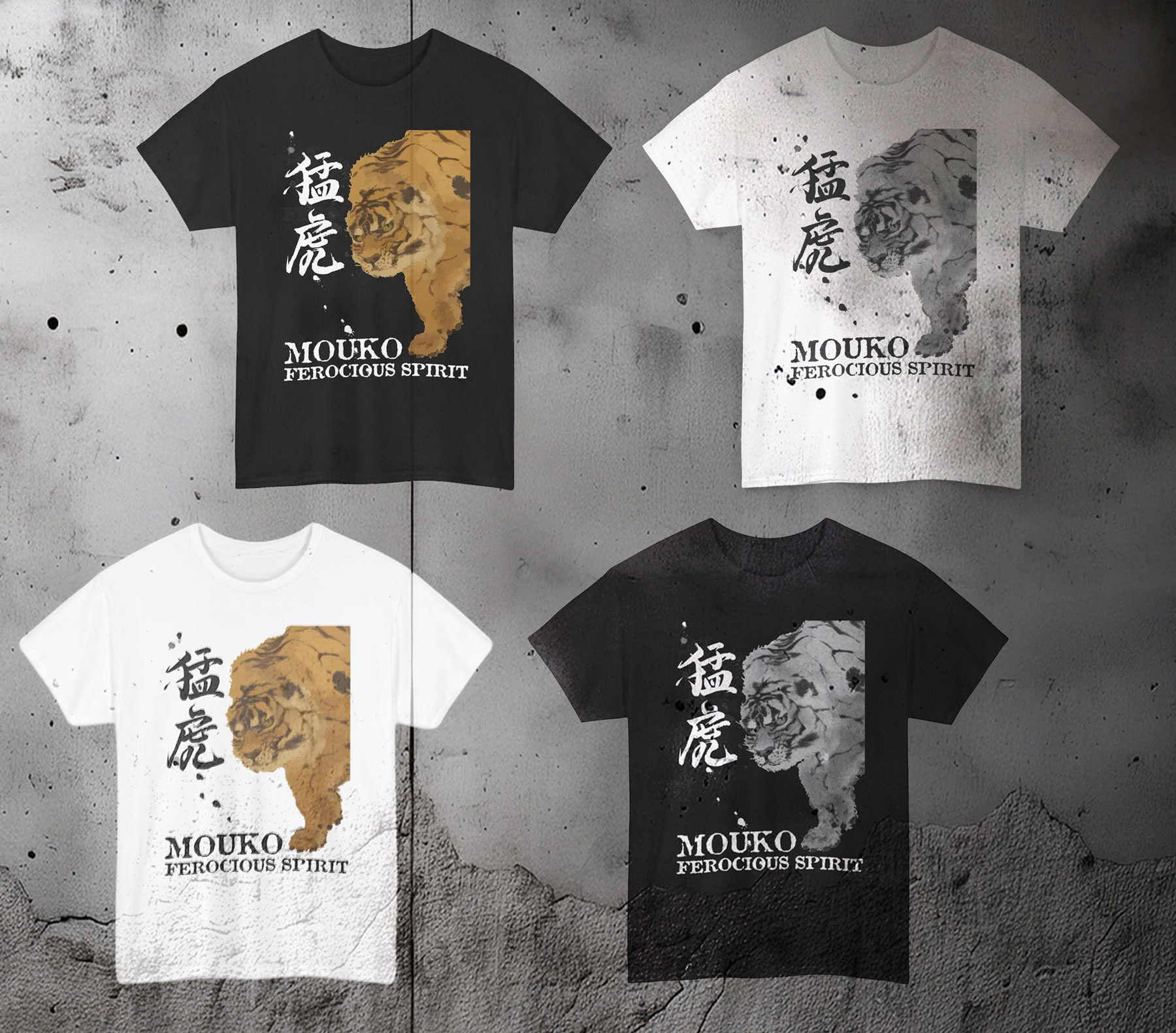
Try It Yourself
Attached is a free, commercial-use vector of "道" (Michi — "the Way"), brushed and vectorized the same way. Full sets are available now on Etsy, with individual characters coming soon to Adobe Stock. Custom character commissions welcome.

Styles of Kanji
Kanji is typically written in three main styles: kaisho (block, most formal), gyōsho (semi-cursive), and sōsho (cursive, most abstract).
For this sample, I chose gyōsho — it has movement and energy while staying versatile and easy to read.
The character itself is "道" (Michi/Dō) — "the Way" — fitting, since it's the same "dō" found in both shodō (書道, the way of calligraphy) and budō (武道, the way of the martial arts).
